STAR Awards Press Release

PRESS RELEASE

FOR IMMEDIATE RELEASE
Contact: Dan Boritt, Executive Director, (317) 759-0661


INDIANA WILDLIFE FEDERATION HONORED AT STAR AWARDS

      Indianapolis, Indiana, December 7, 2023 – ISAE (Indiana Society of Association Executives) selects Indiana Wildlife Federation as the STAR Awards philanthropy organization. ISAE member organizations turned out to support IWF and its mission to promote the conservation, sound management, and sustainable use of Indiana’s wildlife and wildlife habitat through education, advocacy, and action.

IWF is Indiana’s oldest and largest conservation organization. Founded in 1938, IWF has spent the past 80 years advocating for wildlife management, public spaces such as trails and other outdoor recreation facilities.

IWF has a presence at the statehouse in seeking resources for the Indiana Department of Natural Resources, protecting our vital wetlands, and fighting to clean up our rivers and other actions for Indiana’s outdoor enthusiasts.

The STAR Awards were held on Wednesday, December 6, 2023, at the Hampton Inn Homewood Suites Downtown Indianapolis IUPUI.


PRESERVING THE FUTURE OF HOOSIER WILDLIFE

STAR Awards 12.6.2023

Indianapolis Residents Tap into Need for Wetlands Protections and Action on Climate Change

Indianapolis Residents Tap into Need for Wetlands Protections and Action on Climate Change

Birds and Brews, presented by Audubon Great Lakes and Amos Butler Audubon Society, welcomed Indiana residents, local leaders for a discussion on the policy solutions that will protect birds and communities

INDIANA (September 28, 2023) – Indiana’s wetlands are at-risk, and so are its birds. Yesterday, Indianapolis residents gathered for Birds and Brews, presented by Audubon Great Lakes and Amos Butler Audubon Society, to hear from local leaders and policy experts on the steps we can take to protect the important habitat that birds depend on.

“Together, we have the opportunity to inform Indiana lawmakers about the value that wetlands—and the birds who depend on them—bring to the state,” said Marnie Urso, Senior Policy Director for Audubon Great Lakes. “Now is a critical time to enact wetland protections. The U.S. Supreme Court recently issued a decision in Sackett v. EPA. It could place as many as 300,000 acres of wetlands in Indiana at risk of destruction without state protection.”

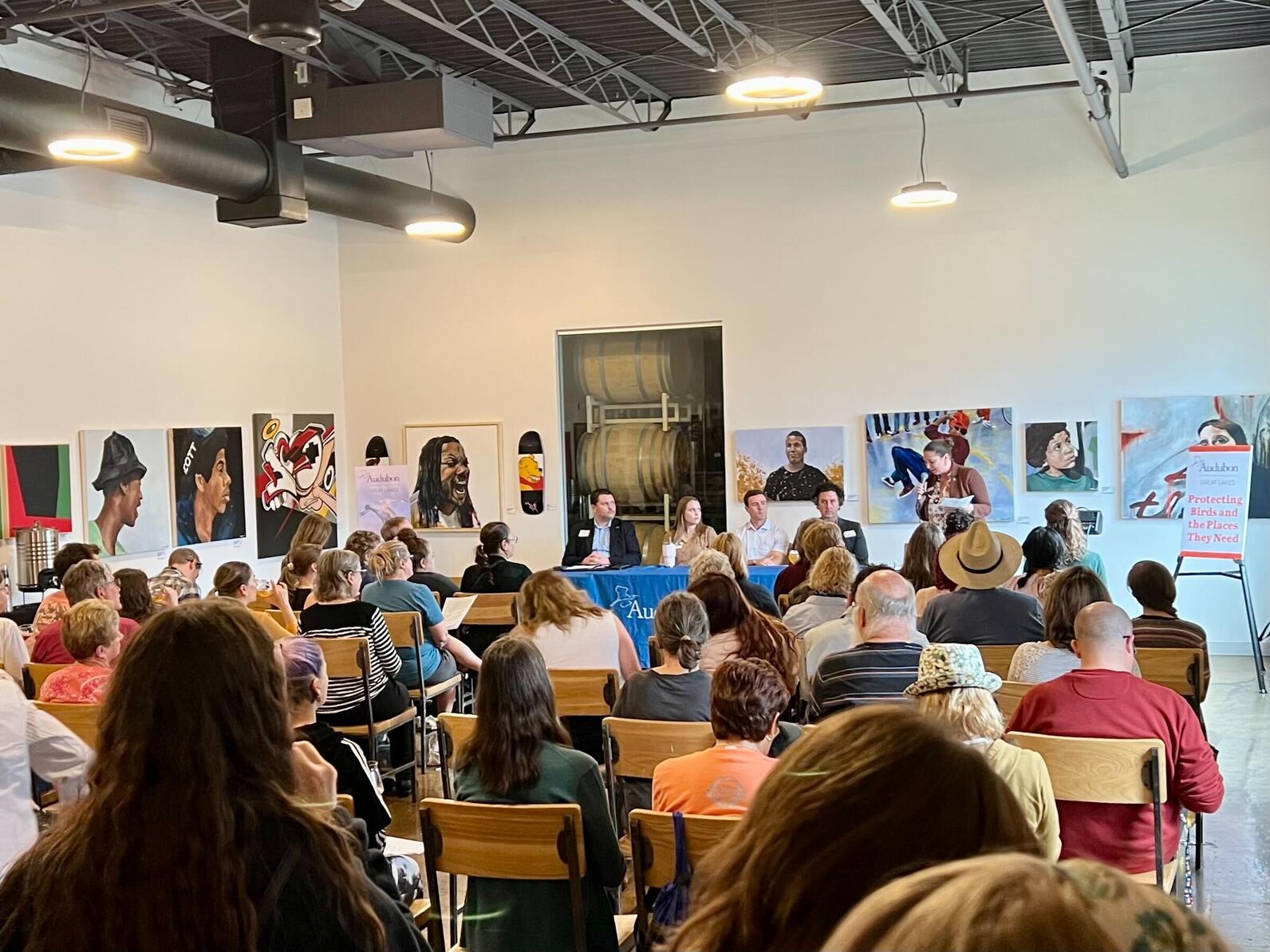
One-hundred Audubon members gathered at Upland FSQ Brewery in Indianapolis. The event included a panel discussion from environmental and policy experts on solutions that will protect Indiana’s wetlands and other natural spaces.

One-hundred Audubon members are seated at Upland FSQ Brewery in Indianapolis for Birds and Brews, facing a table of panelists with art on the wall behind them. Credit: Audubon Great Lakes
One-hundred Audubon members gathered at Upland FSQ Brewery in Indianapolis for Birds and Brews. Photo: Audubon Great Lakes

Indiana has lost more than 85 percent of its wetlands. Wetlands buffer communities against flooding, absorb carbon pollution, and provide habitat for vulnerable birds and other wildlife. Polling released by Audubon Great Lakes last year found that 94 percent of Indiana voters believe that state leaders should either strengthen or maintain Indiana’s current wetlands protections, and nearly three-quarters of voters (74 percent) favor expanding the use of renewable energy sources.

Panelists included David Bausman, Chief Legal Counsel for Indiana Department of Natural Resources, Dan Boritt,  Executive Director for the Indiana Wildlife Federation, Adam Forrer, Policy Director of Climate for Audubon Great Lakes, and Lindsay Trameri, Community Engagement Manager, Office of Sustainability for City of Indianapolis.

Many of our endangered and threatened species call our wetlands home, including more than 200 bird species,” said Dan Boritt, Executive Director for the Indiana Wildlife Federation. “We’re profoundly disappointed in the Sackett v. EPA ruling – yet energized by Audubon members and Indiana residents who are taking steps to protect wetlands for both wildlife and humans.”

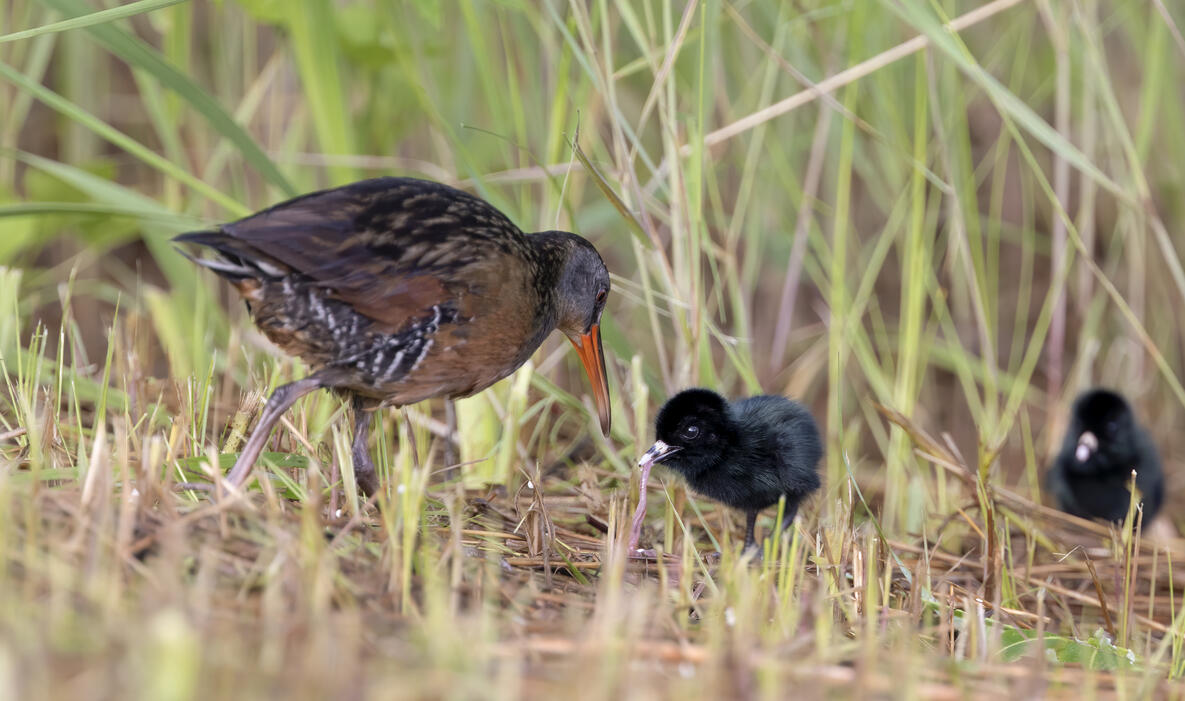
A brown, black, and gray Virginia Rail adult assists one of two black fluffy chicks with a worm in a wetland.
Virginia Rails are one of 49 Indiana bird species that are highly to moderately vulnerable to the impacts of climate change. Virginia Rails. Photo: Shirley Donald/Audubon Photography Awards.

Two-thirds of North American bird species at risk of extinction due to climate change. During the event, panelists also discussed the importance of protecting birds from the looming threat of climate change, while creating resilient communities.

“Climate change is one of the biggest threats facing the wildlife community and our bird populations. In Indianapolis, we’ve made a commitment to eliminate carbon emissions to address climate change,” said Lindsay Trameri, Community Engagement Manager, Office of Sustainability for City of Indianapolis. “As we work towards this critical commitment, we recognize that our ability to thrive and reach a sustainable, resilient future is in all our hands.”


The farm bill looks after more than Indiana’s crops. It can help improve Hoosier lives

Check out this Op-Ed from our Executive Director in the Indy Star. In this op-ed he argues for an increase in conservation funding to ensure Hoosier farmers are able to take advantage of these programs that help increase the quality of life for Hoosiers statewide.

Link to Indy Star article

The farm bill looks after more than Indiana’s crops. It can help improve Hoosier lives

Dan Boritt
Indianapolis Star

The farm bill is one of the most important pieces of legislation for conservation in the United States.

This omnibus legislation is renewed every five years and is set to be renewed in 2023. It provides funding for a variety of programs that help protect our land, water and wildlife. In Indiana, the farm bill has been instrumental in supporting the conservation of iconic species like the white-tailed deer, the bald eagle and the monarch butterfly. The Indiana Wildlife Federation believes that the farm bill is a critical tool for conservation, and we’re committed to using it to its full potential to protect Indiana’s natural resources.

Here are some of the ways that the farm bill can help conservation in Indiana:

  • Protect wildlife habitat. The farm bill provides funding for programs like the Conservation Reserve Program (CRP), which pays farmers to remove environmentally sensitive land from production and plant native grasses and other plants that benefit wildlife. In Indiana, CRP has protected over 1 million acres of land, providing habitat for a wide variety of species.
  • Improve water quality. The farm bill can also be used to fund programs that help reduce soil erosion, which can lead to pollution of waterways. The farm bill can also be used to fund programs that help improve water quality in wetlands, which are important filters for pollutants.
  • Increase hunter access. The farm bill funds programs that help improve public access to hunting and fishing areas. This can be a win-win for both hunters and conservationists, as it can help to increase public support for conservation efforts.

In addition to these provisions, the next farm bill should also include the following measures to improve equity, conservation and climate resilience:

  • Improve equity in the delivery of conservation program funds and technical assistance by supporting local employees who understand Indiana. Addressing historic inequities in agriculture conservation programs will profoundly boost the ability of farmers, ranchers, forest owners and communities across the country to build resilience, while enhancing soil health, water quality, wildlife habitat and livelihoods.
  • Strengthen the linkage between conservation compliance and crop insurance premium subsidies and improve enforcement of these provisions. In exchange for receiving certain farm program benefits, farmers must agree to fundamental soil and wetland conservation provisions to protect wetlands and reduce soil erosion.
  • Increase conservation title baseline funding to meet producer demand and protect and build on conservation funding provided in the Inflation Reduction Act. With farm bill conservation programs greatly over-subscribed, the funding provided in the Inflation Reduction Act is critical for meeting demand from farmers and ranchers. This funding must stay in conservation and climate-smart agriculture in order to address increasing demand for climate-smart conservation practices and long-term outcomes needed for a resilient agricultural economy.
  • Prevent conversion of native grasslands through a nationwide Sodsaver provision. Sodsaver correctly aligns the market risk of putting never-before-cropped grasslands into production by reducing federal premium subsidies for crop insurance on newly cropped, formerly grassland areas. Although currently active in six states, Sodsaver should be expanded nationwide to level the playing field and reduce taxpayer subsidization of risky production to help protect this endangered ecosystem.
  • Better align crop insurance with conservation practices that reduce risk and save money. Remove barriers to, and provide incentives for, adopting risk-reducing conservation practices within the crop insurance program to lower crop insurance costs and increase on-farm resilience.

By working together, we can ensure that Indiana’s wildlife and waterways have a bright future in our state.

Dan Boritt is executive director of the Indiana Wildlife Federation, which is committed to promoting common-sense conservation throughout Indiana.

Congress should protect hunter safety education in schools

Check out this Op-Ed from our Executive Director in the Terre Haute Tribune-Star. In this op-ed he urges Congress to reinstate funding for hunter education to ensure a new generation of sportsmen know how to safely use firearms and archery equipment.

Link to Terre Haute Tribune-Star article

The Indiana Wildlife Federation (IWF) is joining the National Wildlife Federation and other state wildlife affiliates in urging Congress to swiftly enact a bipartisan legislative solution to ensure that schools can continue to access Department of Education funding for archery and hunter safety education.

Archery and hunter safety education programs are vital in teaching our youth about the importance of safety, conservation, and the outdoors. Unfortunately, new laws have put these programs at risk. The Safer Communities Act includes language that would prohibit the Department of Education from funding archery and hunter safety education programs. These programs are designed to teach safe usage of hunting equipment to our future Conservationists throughout our state.

The IWF is urging Congress to amend The Safer Communities Act to protect archery and hunter safety education programs funding. This bipartisan fix is supported by a wide range of organizations, including the National Rifle Association, the National Shooting Sports Foundation, National Wildlife Federation, and the Boy Scouts of America.

We urge Indiana’s congressional delegation to support the reinstatement of archery and hunter safety education in schools. We urge them to work with their colleagues to pass this important legislative fix and ensure that our youth have continued access to these vital programs.

The Indiana Wildlife Federation is a statewide nonprofit organization dedicated to conserving Indiana’s wildlife and natural resources. The IWF works to protect and restore wildlife habitat, promote sustainable land and water management practices, and educate the public about the importance of wildlife conservation.

— Dan Boritt, executive director

Indiana wildlife Federation

Indianapolis

Great News for Clean Water Indiana

Conservation Board doubles Clean Water Indiana funding


INDIANAPOLIS (Aug. 22, 2023) — The State Soil Conservation Board (SSCB) is allotting over $2 million in Clean Water Indiana (CWI) grants for 2023, which is a $1 million increase over 2022.

“As Secretary of Agriculture, I know how hard Hoosier farmers work to be good stewards of the land,” said Lt. Gov. Suzanne Crouch, Indiana’s Secretary of Agriculture and Rural Development. “So, I was pleased to see the legislature acknowledge the importance of soil and water conversation in Indiana by providing additional funding to Clean Water Indiana this past legislative session.”

This increased funding was allocated by the Indiana General Assembly during the 2023 legislative session. The Indiana State Department of Agriculture’s (ISDA) Division of Soil Conservation was awarded over $5 million additional dollars this year. The SSCB recently voted on how to spend the money and declared to increase funding to key water quality and conservation programs, including Clean Water Indiana’s competitive grant program.

Clean Water Indiana was established to provide financial assistance to landowners and conservation groups and supports the implementation of conservation practices which will reduce nonpoint sources of water pollution through education, technical assistance, training and cost sharing programs. Programs under the Clean Water Indiana fund are administered by ISDA’s Division of Soil Conservation subject to direction from the SSCB.

“We are so grateful to the Indiana General Assembly who recognized the importance of water quality in our state and allocated these additional funds to Clean Water Indiana during the past legislative session,” said Don Lamb, Director of the Indiana State Department of Agriculture. “This increased funding for ISDA’s Clean Water Indiana program will assist soil conservation districts across the state as they work hand in hand with our Indiana farmers and landowners.”

There are more than double the amount of available funds to be awarded through a competitive grant process under Clean Water Indiana, with the State Soil Conservation Board voting to increase the grant pool to $2,000,000.

This funding will primarily be used to fund conservation projects and programs at the local level, with typical grantees being some of Indiana’s 92 Soil and Water Conservation Districts, and other conservation organizations. The SSCB expects grant application dollar requests to exceed the available funding. Typical projects include cost-share programs for on-farm conservation best management practices, staffing positions for direct landowner technical assistance and district administration, water quality and soil conservation education programs and more.

“The Clean Water Indiana grants go a long way in ensuring Hoosier landowners and local soil and water conservation districts have the funding they need to complete critical water projects,” said Brad Dawson, Clean Water Indiana grant committee member. “Each year it is amazing to see the types of projects brought to us for funding, and we notice that they are located all across the state, which in turn helps the waterways statewide. Last year we were able to grant a little over $600,000, so I am extremely excited to see increased funding and be able to award more projects, and clean more waterways, going forward.”

The members of the Clean Water Indiana grants committee are Amy Burris, Kenny Cain and Brad Dawson. The SSCB is accepting competitive proposals for targeted projects up to three years in length. Applications are open and are due Sept. 8, 2023 at 12 p.m. E.T. To apply please visit isda.in.gov.

Additional key funding from Clean Water Indiana will go towards expanding Indiana Conservation Reserve Enhancement Program, matching dollars available to Soil and Water Conservation Districts, and as match for Inflation Reduction Act proposals through the United States Department of Agriculture.

For more information on soil conservation and water quality initiatives please visit isda.in.gov.

Hoosier Conservation Newsletter | August 2023

Read the August 2023 edition of the IWF Hoosier Conservation Newsletter. The Monarch Tagging Season is almost here! Dan has important legislative updates in his Letter from the ED. We have speakers for our upcoming Annual Conference and we’re very excited about what they have to share.

Great Reporting Surrounding the Proposed LEAP Project in Lebanon

The Journal & Courier, out of Lafayette, has printed two parts of a three part series on the proposed LEAP Project  proposed by the IEDC in Labanon.  Below are the first two articles, and we highly recommend you subscribe to the Journal Courier to support local reporting like this.


Below is the first part of the reporting by the Journal & Courier :

LEAP project proposes piping millions of gallons of water from Tippecanoe County aquifer

Story by Ron Wilkins, Lafayette Journal & Courier •2h

Editor’s note: This is the first in a three-part series that looks at the proposed use of water resources in Tippecanoe County to benefit economic development in Boone County.

The Indiana Economic Development Corp. touts Lebanon as the ideal location for a 9,000-acre for a “megasite” that one day might be the work site for 50,000 people working in advance manufacturing, mixed-use and corporate campuses.

A project that large requires millions of gallons of water a day — reportedly between 10 million and 100 million gallons a day.

Lebanon’s water resources cannot support such a large site.

One possible solution is the LEAP project: a plan to buy land in the Wabash River aquifer in southwestern Tippecanoe County, and pipe water from there to Lebanon, a distance that is more than one-third the width of the state, according to discussions this spring and summer with natural resource experts.

Google estimates the distance between West Point in Tippecanoe County to Lebanon is nearly 50 miles. The state of Indiana is 140 miles wide.

LEAP project to take water from local aquifers

The Lebanon LEAP project is a proposed development of 9,000 acres of farmland mostly west of Interstate 65 and mostly north of Indiana 32, encompassing the four miles of land north of Boone County Road 50 South.

The LEAP project is 30 minutes from experts at Purdue Research Park and Purdue University, 30 minutes from the Indianapolis Airport and conveniently located within minutes of interstates running north, south, east and west, according to the Indiana Economic Development Corp. website.

The LEAP project developers will buy land over the Wabash River aquifer in order to tap into that underground resource. So far, they are eyeing land southwest of Lafayette, Lafayette Mayor Tony Roswarski said.

“I want to make clear to folks that we understand that we don’t own the water,” Roswarski said. “The water in the aquifer, in Indiana law, if you own the land above, you have the right to tap the water. We understand that.

The proposed wells are not the source of Lafayette’s water, Roswarski said.

The project proposes to construct a pipeline to take ground water from the Wabash River aquifer and pump it to Lebanon.

“We found out about this several several months ago, and had a quick meeting with the (Indiana Economic Development Corp.),” Roswarski said in May.

Reports estimate that the LEAP project will draw millions of gallons of water from Tippecanoe County aquifers, pumping it to Lebanon for use there.

“We originally heard about 10 million (gallons a day), but then we heard it could go up as high as 100 million (gallons a day),” Roswarski said. “When that number came out, we got a little bit more concerned.”

Three main water sources in the Lafayette area

On the surface, the Wabash River runs from northwestern Ohio, across northern Indiana, through Tippecanoe County as it winds its way to Indiana’s western border with Illinois. It eventually drains into the Ohio River, which in turns, feeds the Mississippi River.

Beneath the surface in the area of Tippecanoe County are two aquifers — the Wabash River aquifer and the Taeys River aquifer.

The Wabash River, the Wabash aquifer and the Taeys aquifer all touch in places, said Roswarski and Keith Cherkauer, Purdue professor of agricultural and biological engineering at Purdue University and the director of the Indiana Water Resources Research Center.

The aquifers are fed from falling rain that seeps through the ground into the aquifers.

Lafayette draws its water from the Taeys River aquifer, which is the remains of an ancient river.

“The Teays River existed on the surface historically and drained generally out of Ohio, through Indiana and kind of down to where the Mississippi River is now,” Cherkauer said.

“By the end of the last ice age, it got filled in with sand, gravel, clays, basically crushed parts of the landscape to our north. Then there was a new surface.”

The Taeys was covered up as the melting glaciers created what we know today as the Wabash River, Cherkauer said.

The proposed LEAP project created a stir among the state’s experts on Indiana’s watersheds, rivers, aquifers and its water resources. They met in April via a Zoom conference and discussed various issues raised by the proposed project.

Future reports will take a look at how pumping 100 million gallons of water from the Wabash River aquifer might affect the river down stream, as well as the unseen underground aquifers. The J&C also will report on the discussions about Indiana’s water laws.

Reach Ron Wilkins at rwilkins@jconline.com. Follow on Twitter: @RonWilkins2.

This article originally appeared on Lafayette Journal & Courier: LEAP project proposes piping millions of gallons of water from Tippecanoe County aquifer


Here is the second entry of the three-part series 

A look at potential impact of transferring water from one part of the state to another

Ron Wilkins

Lafayette Journal & Courier

Editor’s note: This is the second in a three-part series that looks at the proposed use of water resources in Tippecanoe County to benefit economic development in Boone County.

LAFAYETTE, Ind. — The proposed LEAP project in Lebanon west of Interstate 65 needs water.

The plan is to take it from the Wabash River aquifer in southwestern Tippecanoe County, and pump it one-quarter of the state’s width to the 9,000-acre development.

In reality, that water — 10 million to 100 million gallons a day — from the Wabash River watershed will never return to the state’s largest river.

Jane Frankenberger, a Purdue University agriculture and biological engineer professor and extension agricultural engineer, summarized the LEAP project’s proposal during an online conference in April.

“Large withdraws like this are not uncommon,” Frankenberger said. “There are locations around Indiana where water is withdrawn, used, then discharged back into the river.

“What’s unusual here is that after the water is used by industry, it would not return to the Wabash River, but rather, piped into a tributary of the White River, possibly Sugar Creek or Eagle Creek — down to the Eagle Creek Reservoir — or somewhere else.

“Thus, it’s not just a withdraw, but a water transfer.”

Frankenberger started the April conference by itemizing three issues: How will the transfer of water to Lebanon affect the Tippecanoe County ground water and future developments in Tippecanoe County? How will transfer of water affect the surface water and the Wabash River? Lastly, how will the water transferred to Boone County affect its creeks after it is used?

Frankenberger wondered if there was enough data to make informed decisions on the transfer of water before the project is set in motion.

The area’s water resources

Keith Cherkauer, a Purdue professor of agricultural and biological engineering and the director of the Indiana Water Resources Research Center, shed some light on Frankenberger’s questions.

The Tippecanoe County area has several surface water resources, including the Wabash River. But beneath the ground, the area has the Teays River aquifer, which is from where Lafayette draws its water, and the Wabash River aquifer, from where LEAP wants to tap.

The Wabash River, its aquifer and the Teays River aquifer all touch in some areas, Cherkauer said. This helps recharge the aquifers.

When the Teays River flowed on the surface, it was comparable in size to today’s Ohio River and flowed from the West Virginia area, north and through Ohio, across Indiana, and continued heading west towards what today is Missouri.

Glaciers from the last ice age pushed the water out of its channel, pressed rocks boulders and other debris on top of the river, then crushed the rocks and boulders into sand, silt and clay, Cherkauer said of the origins of the Teays River.

The aquifer is deepest in the ancient river’s channel, but its water spans areas wider than the old river channel, Cherkauer said.

The effects of transferring water to Lebanon

“If it’s a 10-million-gallon-per-day facility on the Wabash River, we’re probably barely going to notice it,” Cherkauer said.

By comparison, the city of Lafayette pumps between 10 million and 17 million gallons a day for use by its customers, Lafayette Mayor Tony Roswarski said.

But the city draws its water from the Teays River aquifer. The water is used here, treated here and returned to the Wabash River, which recharges the Teays and Wabash rivers aquifers.

“We are blessed here,” Roswarski said. “The aquifer here — the Teays Acquifer — is very strong. It charges well. We’re blessed to have that because not all places have that.”

News about the LEAP project caused some concern among local government officials.

“We originally heard about 10 million (gallons a day), but then we heard it could go up as high as 100 million,” Roswarski said, noting they just heard about the LEAP project late in 2022. “When that number came out, we got a little bit more concerned.

“There a lot of people who could potentially be affected.”

Cherkauer said, “If it becomes a 100-million-gallon-a-day facility, we will start to notice.”

The volume of Indiana’s ground water stored in aquifers is not well quantified.

“The surface water, in general, is increasing,” Cherkauer said. “There are some areas in the northwest part of the state that’s increasing. But much of the state has seen increases in surface water over the last 30 years. Whereas, ground water is very much a mixed signal.”

Test wells have not yielded the needed information about how much water is available in aquifers and how quickly aquifers recharge from surface water, Cherkauer said. This includes the Wabash River aquifer in southwestern Tippecanoe County where the LEAP project wants to tap.

As for taking the 10 million to 100 million gallons of water a day from the Wabash River aquifer, Cherkauer said, “Not a huge amount of the average amount of annual water is going to be transferred. But that doesn’t mean it doesn’t have an effect.”

The transfer of water would affect the Wabash River’s flow downstream from Lafayette during drought years or during times of less-than-normal rainfall, he said.

“The other thing we need to consider because this is a transfer from one watershed to another is: Once the industrial use is done, then that water is going to be returned to surface water,” Cherkauer said of the LEAP project.

“If they’re dumping it into — I think Prairie Creek runs very near this location in Lebanon — 10-million gallons a day will be a substantial in-flow to Prairie Creek,” Cherkauer said during an interview before the April Zoom conference. “A 100-million gallons a day will overwhelm Prairie Creek because it’s very small.”

For Sugar Creek, 100 million gallons a day will increase the flow up to 25%, Cherkauer said.

The need for more data on the effects to the aquifers

“Indiana has plentiful water resources,” Cherkauer said, “but they are not evenly distributed, and that is why we’re having these conversations about moving water from one watershed to another.

“In order to have a better understanding, we have to have better observational records,” he said of the need to gather data to quantify how much water is below the surface and how quickly those aquifers typically recharge.

Tapping the Tippecanoe County aquifer isn’t the issue. It’s the piping of the water across the state and ultimately putting it into a different watershed that might be problematic.

“When you’re considering where to put industrial sites that are heavy water users, there are certainly places in the state that are really good for that, and there are places in the state that are less good for that,” Cherkauer said.

“If you were to put this plant using 10- or 100-million gallons a day of water on the Wabash River, and it was treating it and returning it to Wabash River in about the same place, that would have very little impact,” he said.

“If they’re pulling from the aquifer and dumping to the surface river, then you’re getting a transfer from the aquifer to the surface water, which will lead to a diminished aquifer in time,” he said of the effects on the ground water. “But it’s a slow process. Since the river here is somewhat connected to the aquifer, it would have less impact.”

Tippecanoe County officials, including the cities, are working with the Indiana Department of Economic Development and want to help other parts of the state find the success that Tippecanoe County has found, Roswarski said.

“We need to make sure it’s done in a way that is sustainable and doesn’t cause problems here in our community,” Roswarski said.

“The elected officials that are here now feel like we have a responsibility to the people coming after us that this was done correctly and that our voice was heard and that we’ve done this in a way that is sustainable for everyone,” Roswarski said.

The project likely is five or six years away from construction, Roswarski said.

Reach Ron Wilkins at rwilkins@jconline.com. Follow on Twitter: @RonWilkins2.
Let INDOT Know You Support Native Plantings Along Indiana Roadways

Do you think that the Hoosier state should do more to support native wildlife?
With over 60,000 acres of roadsides and medians INDOT is vitally important to supporting ecosystem health by creating wildlife habitat throughout the state. Take THIS SURVEY to to show your support for native plantings and help urge more native plantings to help clean our water and feed our wildlife!  Native plantings require less maintenance and can save taxpayers money, while providing beauty and functionality.  


Indianapolis Honored as a Top Five City That Gardens for Wildlife

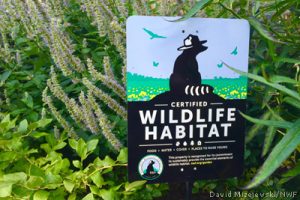
IWF has been honored as one of the top 5 cities that Garden for Wildlife!


Top Five Cities That Garden for Wildlife


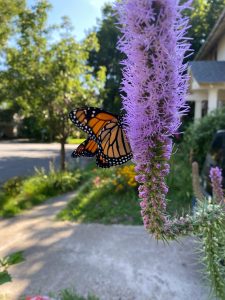
Did you know that you can help wildlife by gardening? That’s right! By planting native plants, providing water sources, and creating safe places for wildlife to raise their young, you can create a backyard habitat that will attract birds, butterflies, bees, and other animals.

The Indiana Wildlife Federation is a great resource for information on how to garden for wildlife. They offer a variety of resources, including a certification program and educational materials.

So what are you waiting for? Start gardening for wildlife today!

Benefits:

There are many benefits to gardening for wildlife. Some of the benefits include:

  • Increased biodiversity: By providing a variety of food sources and habitats, you can help to increase the diversity of wildlife in your area.
  • Improved air quality: Native plants help to filter air pollution, which can improve air quality for humans and animals.
  • Reduced stress: Spending time in nature has been shown to reduce stress and improve mental health.
  • Increased property value: Studies have shown that homes with gardens and other natural features sell for more money than homes without them.

How to get started:

If you’re interested in getting started with gardening for wildlife, here are a few tips:

  • Choose native plants: Native plants are adapted to the local climate and conditions, so they are more likely to survive and thrive.
  • Provide a variety of food sources: Birds, butterflies, and other animals need a variety of food sources to survive. Plant a variety of native plants that provide nectar, fruit, and seeds.
  • Create a water source: A water source is essential for wildlife, especially during hot weather. Provide a birdbath or other water source in your yard.
  • Add some shelter: Wildlife also needs places to hide from predators and the elements. Add some shelter to your yard by planting shrubs or trees, or by creating a brush pile.

Gardening for wildlife is a great way to help the environment and improve your own quality of life. By following these tips, you can create a backyard habitat that will attract birds, butterflies, bees, and other animals.

Recovering America’s Wildlife Act (RAWA) has been reintroduced!

The Bipartisan Recovering America’s Wildlife Act Has Been Reintroduced

This Landmark bipartisan bill would be the most significant investment in wildlife and habitat conservation in a generation.

Last year, as 2022 came to an end, we barely missed the opportunity to include RAWA in the omnibus spending bill, but with the work of organizations throughout the country we have a second chance.  U.S. Senators Martin Heinrich (D-N.M.) and Thom Tillis (R-N.C.) reintroduced the bipartisan Recovering America’s Wildlife Act (RAWA). This legislation invests in proactive, state-led on-the-ground conservation. These locally driven, science-based strategies will support the long-term health and wildlife throughout the Hoosier state.

“Protecting America’s fish and wildlife habitat means conserving the creatures we love before they ever become imperiled,” said Heinrich. “After all, our children deserve to inherit the full breadth of American wildlife, from bumble bees to bison, that we know today. This legislation will make that possible.”  “Passing RAWA into law will mean our grandchildren will be able to experience the same rich and abundant American wildlife—from bumblebees to bison—that we have been so lucky to grow up with” continued Heinrich.

“Today, we are facing another crisis with too many fish and wildlife being placed on the endangered species list, negatively impacting businesses, farmers, and landowners. This situation must be avoided at all costs, and RAWA gives state and tribal wildlife commissions the tools needed to perform proactive, on-the-ground conservation to prevent threatened species from becoming endangered,” said Tillis.

U.S. Representative Debbie Dingell (D-Mich.) will be leading the legislation in the House. “RAWA has always been a bipartisan effort. The United States is facing an unprecedented biodiversity crisis, and we have a conservation, economic, and moral obligation to act in order to protect and recover America’s wildlife for future generations. I have been proud of the support we’ve built behind RAWA from a broad, bipartisan coalition since its first introduction in 2016, and I’m optimistic about the progress we can make this year. We look forward to a strong, bipartisan reintroduction in the House in April. Protecting our nation’s vast and diverse wildlife isn’t a partisan issue, it’s our responsibility, and we won’t stop working until this bill becomes law,” said Dingell.

The Recovering America’s Wildlife Act would immediately become the most important funding mechanism for States, territories, and Tribes. This bill will greatly increase Indiana’s ability to conserve those species that are most at risk in the Hoosier state.  Existing federal funding support is insufficient and does not allow our Department of Natural Resources to perform the vital work needed to recover the wildlife of our state.  RAWA would give Indiana wildlife up to $18 million annually to help stave off the threats the currently face.  RAWA would fundamentally transform the way Indiana is able to aid our wildlife, protecting species that continue to decline and have little chance of receiving aid under our currently reality.  This bill would unleash a new era of conservation for bobwhite quail, migrating waterfowl, loggerhead shrike, Blanding’s turtles, lake sturgeon, osprey, banded pigmy sunfish, cerulean warblers, green salamanders and timber rattlesnakes.  These species, which are vital to a functioning environment, are often not those that receive attention, but RAWA will allow us to protect them for future generations.

This collaborative, nonregulatory, locally driven approach of the Recovering America’s Wildlife Act should appeal to the common-sense conservatism of Sens. Todd Young and Mike Braun. We’re hopeful that each member of the Indiana delegation will support it once it is on the floor.  Indiana needs RAWA!